University of Virginia • Department of Biology
Decoding How the Nervous System
Assembles, Adapts, and Heals
We study how the nervous system builds itself, trims itself, and heals. Why do so many developing neurons die, on purpose, while the nervous system is wiring up? How does a survival signal travel a meter of axon back to the cell body? How do the new weight-loss drugs change what the brain wants to eat? We take on people who ask questions we cannot answer yet, and we give them the tools to answer them.
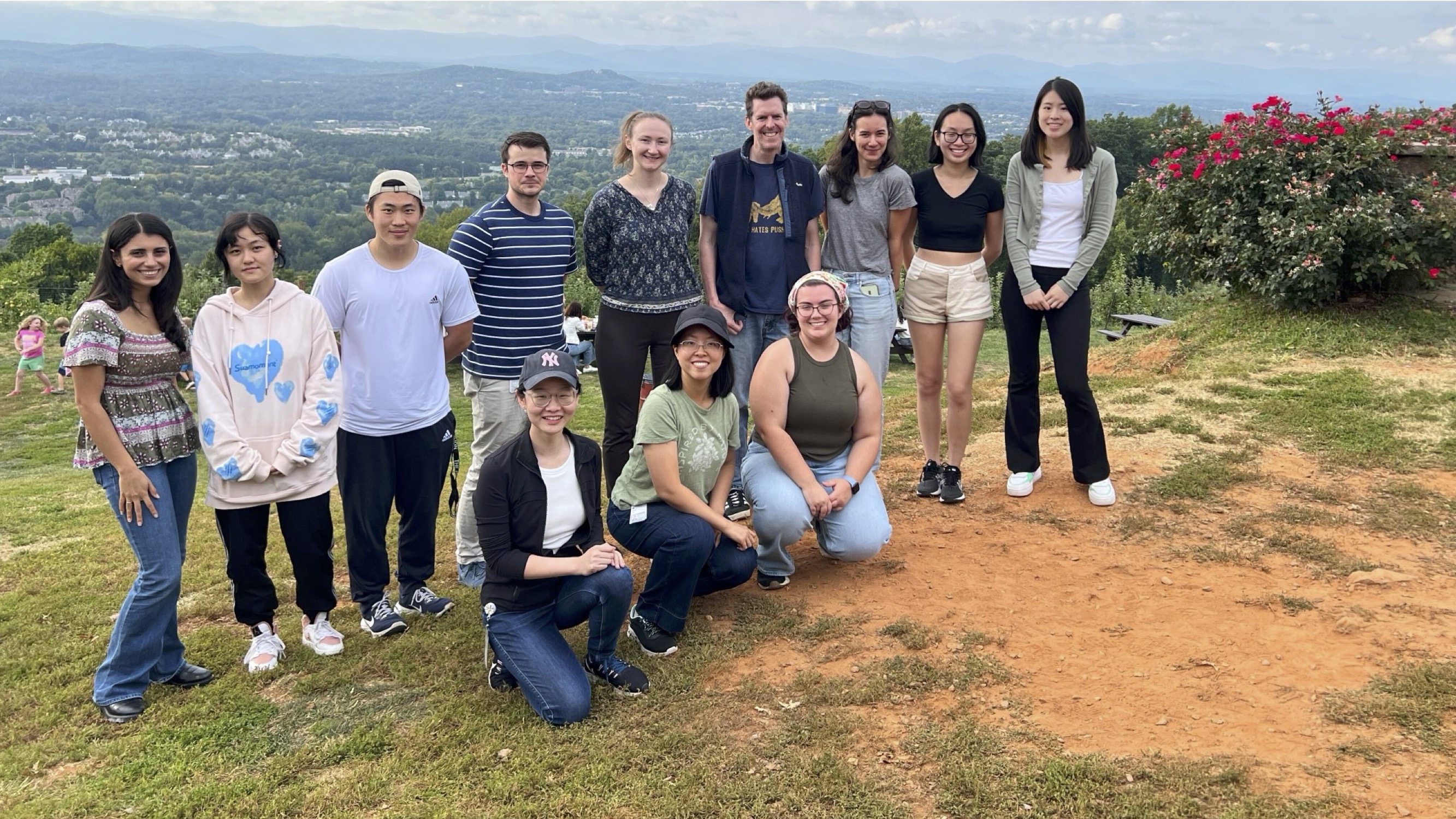
A brain reward circuit inhibited by next-generation weight-loss drugs
Godschall, Gungul, Sajonia et al. map a circuit in the central amygdala through which GLP-1 drugs suppress reward-driven eating — published in Nature.
Read the story → InteractiveBDNF Signaling Atlas
Explore 680,466 single cells responding to one neurotrophic signal.
Open the atlas → RecruitingJoin the lab
Undergraduates, graduate students, and postdocs are welcome to reach out.
See opportunities →What We Study
Research Themes
We work where neuroscience, cell biology, and metabolism overlap — and when the method we need does not exist yet, we build it.
Neural Circuit Assembly
How do neurons compete for survival during development? We study how the balance between protective neurotrophic signals and death-promoting TNF receptor signals sculpts neural circuits.
Learn more →Axon Degeneration
Axon pruning during development shares molecular machinery with neurodegenerative disease. We investigate death receptors, SARM1, and the signals that trigger axon destruction and repair.
Learn more →Brain & Metabolism
How does the brain regulate feeding behavior and energy balance? We study hypothalamic circuits, neurotrophic factor signaling in metabolism, and how the brain adapts when calories are scarce.
Learn more →Long-Distance Signaling
Neurons can extend axons over a meter long. We study how survival signals travel from axon terminals back to the cell body through signaling endosomes and extracellular vesicles.
Learn more →Sensory Neuroscience
How does developmental signaling shape our perception of touch and pain? We investigate how TNF family members regulate sensory neuron properties and nociception throughout life.
Learn more →Technology Development
We build new tools for neuroscience, including magnetogenetics for remote neuronal activation and single-cell mass cytometry (CyTOF), which measures dozens of proteins at once in individual brain cells.
Learn more →Featured Interactive Resource
BDNF Signaling Atlas
Explore how 20 distinct spinal cord cell types interpret a single neurotrophic signal across 680,466 individual cells and 19 signaling markers (18 shown in the atlas), from Sewell et al. 2026 in eLife.
How We Work
Our Five Principles
These values guide everything we do — from how we design experiments to how we treat each other.
Integrity
Honest science, honest communication, honest relationships.
Courage
Ask the hard questions. Challenge assumptions — including your own.
Generous Collaboration
Share ideas freely. Lift others up. Science is a team sport.
Curious Humility
Stay curious. Stay humble. The best ideas come from listening.
Universal Access to Truth
Science belongs to everyone. We meet people where they are.
Curious About Joining?
We welcome curious scientists from every background: undergraduates, graduate students, and postdocs. If you're excited about understanding the nervous system, we'd love to hear from you.